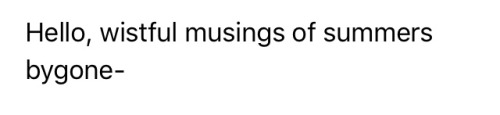
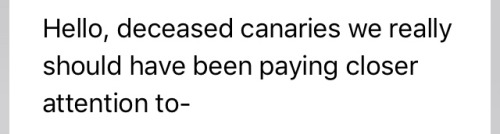
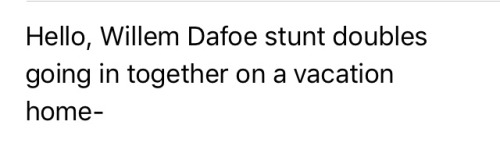
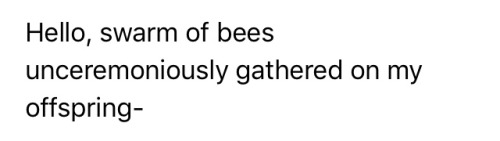
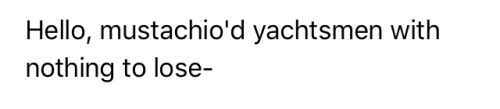
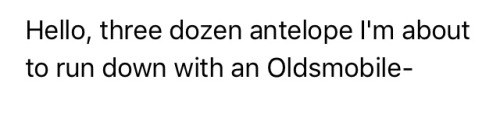
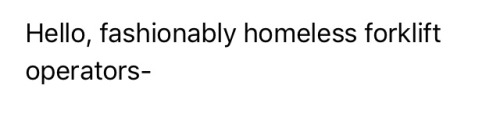
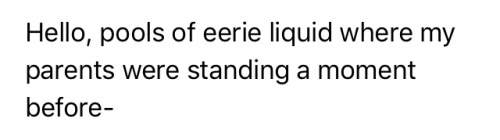
Freelancing in technical theater means you’re on a lot of different email lists. People need a crew, they send out an email, you respond with your availability. Now, most people start these with things like “hey folks” or “hi everyone”. Neal is not most people.
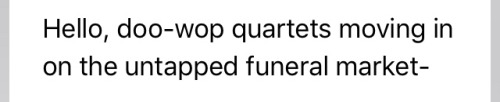
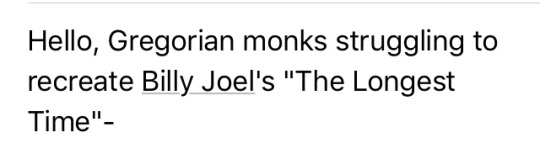
His openers started off innocent enough.
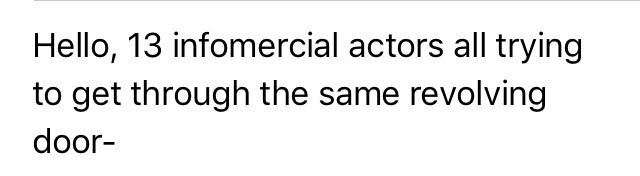
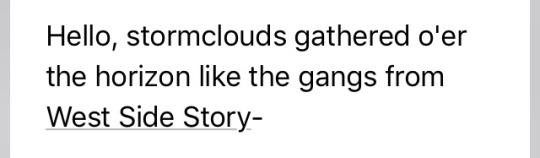
Then, he started to push boundaries.
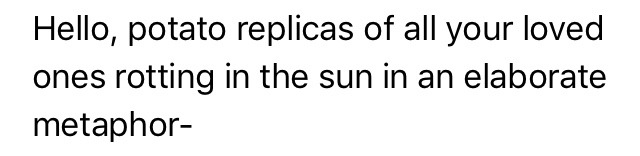
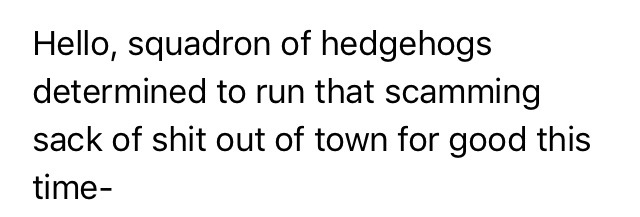
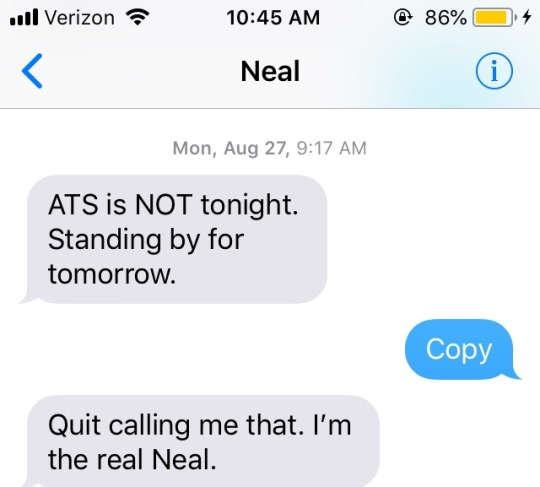
And as you can see, it has spiraled out of control since then.
Tag yourselves. I’m the anteater in a suit who thinks he can pass.
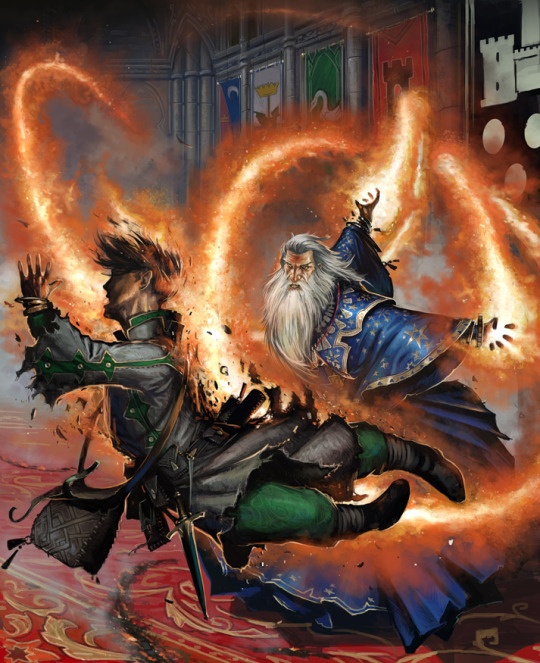
Combat is easy to describe compared to narrating spell attacks. I ran into this problem last session when I was getting into detail telling the barbarian how they tore off an ogre’s head but then the druid just kept using Fire Bolt and I kept defaulting to “you shoot a bolt of fire at his face.” I’m going to try and vary things up with these lists and help everyone else in the process! I am organizing them by energy type.
Mode of Attack
Half of a spell’s attack is how the caster shapes their spell. The same spell can look very different with every casting if you have a creative DM. Feel free to switch it up each time it’s cast, or vary the same spell when cast by different characters of different classes.
Attack Words
Generic shapes and terms that will launch from the caster’s hand.
Energy manifests from thin air a foot in front of their instrument as they play
Energy is shaped like ribbons of written music that ripples towards enemies
Several tiny motes of energy appear with each note sung or played. Each point of damage comes from a mote hitting the opponent (rolls a 4 out of a d6, 4 of the 6 note-motes hit)
Cleric
Energy falls from the sky or emerges from the ground as the cleric prays
Beam of energy originates from holy symbol
Spell attack should highlight that the cleric is granted their powers from a greater power, don’t have the energy come from their hand/finger. Have the energy come TO them, and then be thrown at the enemy.
Druid
Energy is shaped like an animal.
Energy rushes forth from the surrounding wilderness and zooms past the druid and toward the foe.
Much like Cleric, energy shouldn’t come from the caster. It should come from elsewhere before being thrown at the enemy.
Fighter (Eldritch Knight)
Energy blasts from their bound weapon pointed at the enemy.
Energy fires from their mouth as they yell.
Energy surrounds their weapon and is used in tandem with it (if close enough)
Monk (Way of Four Elements)
Literally just watch Avatar: the Last Airbender and do that.
Paladin
Most Paladin spells are smite-based, so they usually happen when an attack hits. Otherwise, let the energy come from a higher power like the Cleric.
Energy bursts forth from within the creature hit
Energy surrounds weapon right as the strike lands
Energy falls from the sky or erupts from the ground
Ranger
Honestly, most Ranger spells often seem a lot like man-made traps like Cordon of Arrows (arrow traps), Fog Cloud (smoke grenade), or Grasping Vine (slipknot trap). But otherwise, Play it like the Cleric where the energy comes from a higher power.
Energy takes the form of the Ranger’s animal companion or an animal they associate with.
Spells seem to cast automatically whenever the Ranger is in a tight spot, almost as if nature itself is protecting them. The Ranger gives an approving nod whenever this happens in thanks.
Rogue (Arcane Trickster)
Energy is always accompanied by a shimmer of glitter
The Rogue plays with the energy over their fingertips as they whistle before casting the spell.
Energy enchants one of the Rogue’s daggers and casts the spell by tossing the dagger at the intended location or target.
Sorcerer (Draconic Bloodline)
Energy takes the shape of a dragon of your bloodline.
Energy surges forth from your breath
All energy takes the shape of your bloodline dragon’s energy type, regardless of the actual energy type. For instance, a sorcerer of a blue dragon’s bloodline that casts Burning Hands or Cone of Cold keeps the energy type but shapes the fire and cold damage into the form of a bolt of lightning.
Sorcerer (Wild Magic)
Energy takes on many random forms, never under the full command of the Sorcerer.
Energy erupts from random places in the environment when the Sorcerer calls upon them.
Energy bubbles and fizzes with all energy types (but mostly the one called upon), as if a piece of Limbo was thrown at the enemy.
Warlock (Archfey)
Your energy shimmers with iridescent colors and showers enemies with sparks of glitter.
Warlock (Great Old One)
Your magic corrupts and twists the flesh of the target of your spell, regardless of the energy type.
Warlock (Fiend)
Energy takes the shape of the unholy symbol of your patron.
Wizard (Abjuration)
Energy shoots forth from your magical wards, arcing towards your enemies.
Wizard (Conjuration)
You conjure a short-lived elemental of the energy type you need. It soars at the enemy.
Wizard (Divination)
You weave the glowing threads of fate in the palms of your hands, tweaking reality to cast your spell.
Wizard (Enchantment)
You enchant an object to exude the energy and toss it at the enemy.
Wizard (Evocation)
I mean, you just sorta blast them. That’s what this school’s about.
Wizard (Illusion)
Your spell usually spawns two or three illusory copies. When the attack misses, the enemy simply managed to dodge the right duplicate.
Wizard (Necromancy)
Your energy takes the shape of a skull screaming as it flies toward the enemy
Wizard (Transmutation)
You transmute the energy out of the surrounding environment and fire it at the enemy
On-Hit
So if half of a spell’s attack is the shape and travel of the spell, the other half is when the spell hits. I organized this list by energy type, as different energies will do different sorts of things when they hit a creature. This is mostly a collection of interesting effects, colorful language, and examples.
Fire
Your bolt of fire singes their armor (burning cloth, blackening leather, discoloring metal)
A tiny bead of fire explodes on contact
Showers them with red sparks
Your attack leaves behind a billowing trail of smoke
A fast-travelling meteor of flame soars from the sky towards the enemy.
Your flames leave blisters and cracked skin in its wake.
Your fire blackens the enemy’s flesh
Cold
You freeze the moisture in the air into icy daggers that fall onto your enemy
You freeze the water in their blood to damage them
Their skin turns blue and numb
You literally hurl a snowball at them.
Your spell leaves them covered in a layer of frost
A buildup of ice covers where your spell hit. (it’s easily shattered once they move, though)
A blast of icy wind and rain leaves them shivering.
Thunder
A crack of thunder pummels your foe
A high-pitched, deafening shriek focuses itself on the target
A thin trail of blood races from the foe’s ears from a sound no one else can hear
The enemy falls to their knees cupping their hands over their ears, gritting their teeth
You buffet the target with waves of thunderous sound
The ground shakes with the force of your spell. Brittle glass objects nearby shatter.
Lightning
Lightning comes from the sky to smite your foe
You all smell the faint odor of ozone before a bright bolt of lightning streaks toward the target of your spell
Before your enemy can blink they are showered in electrical sparks followed by crippling pain
The enemy’s back stiffens as the powerful current of lightning surges through them
Your attack leaves a permanent web of lightning shaped burns all over one side of their body
Your blast of lightning causes their skin to rupture as it travels through their body
Acid
Your acid sizzles as it burns a new, unnatural color into their skin
The attack melts their flesh, leaving them permanently disfigured at the site of the spell
Your spell’s acid causes blue fire to burn where it hit their skin, and bleaches their armor and belongings
A rancid smell fills the foe’s nostrils as the acid bubbles on their bare skin, burning through the simple cloth of their shirt.
Poison
You spew a poisonous cloud from your mouth at your opponent
A spectral viper or insect is flung at the opponent, biting them and filling them with magical venom
Your index and middle finger each grow a poisonous fang which you sink into your opponent’s arm (melee range spell attacks only)
The enemy’s mouth fills with a foul tasting liquid which forces its way down their throat
Necrotic
Your target’s flesh bubbles and boils as a black ichor sputters from the spell’s origin
The foe’s flesh festers with magical disease as boils and wounds quickly cover the affected area
A skeletal hand wriggles free from beneath the earth, flying towards the target
An incorporeal undead shrieks as it flies from your finger toward the enemy to deliver the spell’s effect
Black energy swirls around your arm before launching towards the enemy as if it had a life of its own
Your iridescent blue magic enters the target’s body and afflicts their soul, making them momentarily dazed as their eyes glaze over.
Radiant
A holy light shines from the skies to harm your target, regardless of time of day or obstructions
A halo of radiant energy surrounds your head and blinds the target as they gaze upon it
Enemies that aren’t of your alignment hear the whispers of your deity moments before being enveloped in a blinding white light
The foe’s eyes and mouth emit warm light and they howl in pain
A blade of radiant energy slashes through the victim, leaving a trail of blinking motes of light in its wake
The enemy’s skin blisters from the raw positive energy surging through them
So essentially this whole post was a creative writing assignment for myself, but I hope that it gives you guys new creative ideas for new spells or new ways to describe existing spells! They don’t much affect the mechanics of the spell at all, so most DMs I suspect will be fine with most of these descriptions if you want your character to cast spells a certain way.
people talk about women being ‘emotional’ and ‘overreacting,’ but you don’t see a woman making an arch-nemesis out of an albino whale and obsessively chasing it down like a lunatic for 585 pages
I’m a huge podcast fan, and I listen to a lot of Dungeon and Dragons/roll playing game podcasts. What I feel is missing is women playing D&D. Especially women DMs. I think the world is missing out on hearing how fun women playing D&D must be. And how different it must be. I for one would be thankful to find it and hear it. I hope I get to hear a women led rpg podcast someday. Thank you.
Girls Guts Glory comes to mind as well as Shieldmaidens.
Both are an all-female D&D game groups that do youtube videos/streams/podcasts
It’s called Dungeons, Dice, and Everything Nice. They just finished their first season/arc and already starting the next. They are a super cool and you should give them a chance.
I love this post so so much and we are so honored to be included among these names. Also, I’ve gotten some people being like ‘lol don’t u know there’s already an all female d&d podcast?’
There should be TONS. We are not competition. We are a cult and we WILL CAST SPELLS ON YOU. I will stand by my other lady dnd pods until DEATH.
thx,
km
There should be TONS. We are not competition. We are a cult and we WILL CAST SPELLS ON YOU.
it’s hilarious to me when people call historical fashions that men hated oppressive
like in BuzzFeed’s Women Wear Hoop Skirts For A Day While Being Exaggeratedly Bad At Doing Everything In Them video, one woman comments that she’s being “oppressed by the patriarchy.” if you’ve read anything Victorian man ever said about hoop skirts, you know that’s pretty much the exact opposite of the truth
thing is, hoop skirts evolved as liberating garment for women. before them, to achieve roughly conical skirt fullness, they had to wear many layers of petticoats (some stiffened with horsehair braid or other kinds of cord). the cage crinoline made their outfits instantly lighter and easier to move in
it also enabled skirts to get waaaaay bigger. and, as you see in the late 1860s, 1870s, and mid-late 1880s, to take on even less natural shapes. we jokingly call bustles fake butts, but trust me- nobody saw them that way. it was just skirts doing weird, exciting Skirt Things that women had tons of fun with
men, obviously, loathed the whole affair
(1864)
(1850s. gods, if only crinolines were huge enough to keep men from getting too close)
(no date given, but also, this is 100% impossible)
(also undated, but the ruffles make me think 1850s)
it was also something that women of all social classes- maids and society ladies, enslaved women and free women of color -all wore at one point or another. interesting bit of unexpected equalization there
and when bustles came in, guess what? men hated those, too
(1880s)
(probably also 1880s? the ladies are being compared to beetles and snails. in case that was unclear)
(1870s, I think? the bustle itself looks early 1870s but the tight fit of the actual gown looks later)
hoops and bustles weren’t tools of the patriarchy. they were items 1 and 2 on the 19th century’s “Fashion Trends Women Love That Men Hate” lists, with bonus built-in personal space enforcement
Gonna add something as someone who’s worn a lot of period stuff for theatre:
The reason you suck at doing things in a hoop skirt is because you’re not used to doing things in a hoop skirt.
The first time I got in a Colonial-aristocracy dress I felt like I couldn’t breathe. The construction didn’t actually allow me to raise my arms all the way over my head (yes, that’s period-accurate). We had one dresser to every two women, because the only things we could put on ourselves were our tights, shifts, and first crinoline. Someone else had to lace our corsets, slip on our extra crinolines, hold our arms to balance us while a second person actually put the dresses on us like we were dolls, and do up our shoes–which we could not put on ourselves because we needed to be able to balance when the dress went on. My entire costume was almost 40 pounds (I should mention here that many of the dresses were made entirely of upholstery fabric), and I actually did not have the biggest dress in the show.
We wore our costumes for two weeks of rehearsal, which is quite a lot in university theatre. The first night we were all in dress, most of the ladies went propless because we were holding up our skirts to try and get a feel for both balance and where our feet were in comparison to where it looked like they should be. I actually fell off the stage.
By opening night? We were square-dancing in the damn things. We had one scene where our leading man needed to whistle, but he didn’t know how and I was the only one in the cast loud enough to be heard whistling from under the stage, so I was also commando-crawling underneath him at full speed trying to match his stage position–while still in the dress. And petticoats. And corset. Someone took my shoes off for that scene so I could use my toes to propel myself and I laid on a sheet so I wouldn’t get the dress dirty, but that was it–I was going full Solid Snake in a space about 18″ high, wearing a dress that covered me from collarbones to floor and weighed as much as a five-year-old child. And it worked beautifully.
These women knew how to wear these clothes. It’s a lot less “restrictive” when it’s old hat.
I have worn hoop skirts a lot, especially in summer. I still wear hoop skirts if I’m going to be at an event where I will probably be under stage lights. (For example, Vampire Ball.)
I can ride public transportation while wearing them. I can take a taxi while wearing them. I can go on rides at Disneyland while wearing them. Because I’ve practiced wearing them and twisting the rigid-but-flexible skirt bones so I can sit on them and not buffet other people with my skirts.
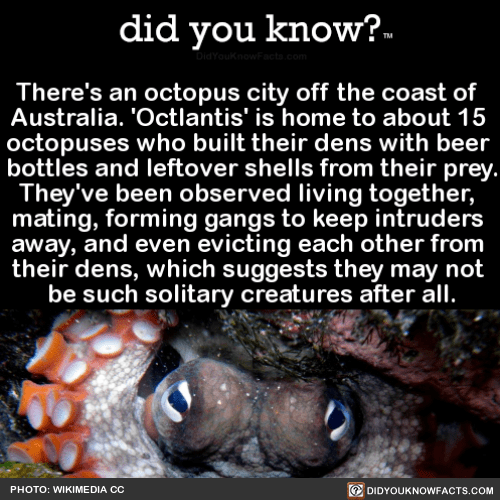
There’s an octopus city off the coast of Australia. ‘Octlantis’ is home to about 15 octopuses who built their dens with beer bottles and leftover shells from their prey. They’ve been observed living together, mating, forming gangs to keep intruders away, and even evicting each other from their dens, which suggests they may not be such solitary creatures after all. SourceSource 2Source 3



















































 Organized Chaos